
Resource
Treating diabetes early can help people with Spina Bifida live longer and healthier lives.
What is Type 2 Diabetes?
Type 2 diabetes is a health problem that makes it hard for the body to use a hormone called insulin. Insulin helps move sugar (called glucose) from the blood into the body’s cells to give us energy. When the body cannot use insulin well, sugar stays in the blood instead of going into the cells. This leads to high blood sugar.
Type 2 diabetes is the most common kind of diabetes. It can happen at any age—even in kids and teens—but is more common in adults. The good news is that it can often be prevented with healthy habits.
What is Pre-Diabetes?
Pre-diabetes means that blood sugar is higher than normal but not high enough to be called diabetes yet. It is a warning sign. Doctors can check for pre-diabetes with a blood test.
People with pre-diabetes may have a dark, thick patch of skin on the back of the neck, under the arms, or in skin folds. This is called acanthosis nigricans and is a sign that the body is making too much insulin to try to control the high blood sugar. If you notice this skin change, it’s important to see a doctor for testing.
When Does Pre-Diabetes Become Type 2 Diabetes?
Pre-diabetes can turn into type 2 diabetes when the body can no longer make enough insulin or use it well. This causes high blood sugar. Doctors say a person has type 2 diabetes when their fasting blood sugar is over 126 or their A1C (a test of average blood sugar) is over 6.5%.
High blood sugar can hurt the body. It can cause problems with the kidneys, heart, eyes, nerves, and blood flow. It can also lead to more urinary tract infections. That’s why it’s important to treat diabetes early.
What Causes Prediabetes and Type 2 Diabetes?
The biggest cause of pre-diabetes and type 2 diabetes is obesity. Obesity means having too much body fat. Doctors use something called BMI (body mass index) to measure this. A person is overweight if their BMI is between the 85th and 95th percentile for their age and height.
A person is obese if their BMI is above the 95th percentile. About half of people with Spina Bifida (SB) are obese. This may be because some people with Spina Bifida:
- have a slower metabolism (they burn fewer calories).
- may have medical issues, pain, or other barriers that make it hard to stay active.
- may not have easy access to healthy food and rely more on processed or sugary foods.
Other risk factors for type 2 diabetes:
- A family history of diabetes
- Being Latino/Hispanic, Black/African American, Native American, Pacific Islander, or South Asian
- Being older than 45 (but it can start in kids as young as 8)
- Not being active at least 3 times a week
- For women: having PCOS (polycystic ovarian syndrome), having diabetes during pregnancy, or having a baby who weighed more than 9 pounds at birth
How Do Doctors Check for Diabetes and Pre-Diabetes?
Doctors look for signs of diabetes like:
- Being very thirsty and drinking a lot
- Feeling very hungry and eating a lot
- Going to the bathroom to pee a lot
- Feeling tired or having low energy
Doctors will also check weight, height (or sometimes arm span), and look for dark, thick skin (acanthosis) on the neck or armpits that can be a sign of high insulin.
They may order blood tests like:
- Metabolic panel – checks liver and body salts
- Fasting insulin and c-peptide – shows how much insulin the body makes
- Lipid panel – checks cholesterol
- A1C test – shows how blood sugar has been over the past 3 months
A1C Results:
- Normal: less than 5.7%
- Pre-diabetes: 5.7% to 6.4%
- Diabetes: 6.5% or higher
What Can You Do to Prevent or Treat Pre-Diabetes or Type 2 Diabetes?
- Exercise for 30–60 minutes at least five days a week. This includes things like walking, pushing your wheelchair, or doing chair/arm exercises.
- Check food labels and avoid foods with more than 10 grams of added sugar.
- Skip sugary drinks like soda, sweet tea, sweet coffee drinks, and fruit juice with added sugar.
- Eat three healthy meals a day. Follow tips from MyPlate.gov or the American Diabetes Association.
- Limit snacks between meals — and choose healthy ones, not sugary treats.
- Ask a dietitian for help planning healthy meals if needed.
How is Type 2 Diabetes treated?
- Keep eating healthy and stay active.
- Get your blood sugar checked regularly. This might be done at home or the doctor’s office. Some people use a device called a continuous glucose monitor.
- Visit the doctor every three months if blood sugar is high, or every six months if it’s under control.
- If your A1C is over 7.0, you might need medicine to help control your blood sugar. Your doctor will choose the best medicine for you based on your health and any side effects.
Additional Resources:
- American Diabetes Association: https://diabetes.org/living-with-diabetes
- Spina Bifida Association: Nutrition, Metabolic Syndrome, and Obesity, Guidelines for the Care of People with Spina Bifida, https://www.spinabifidaassociation.org/for-healthcare-professionals/guidelines/
Type 2 Diabetes Medicines: What They Do and What People with Spina Bifida Should Know
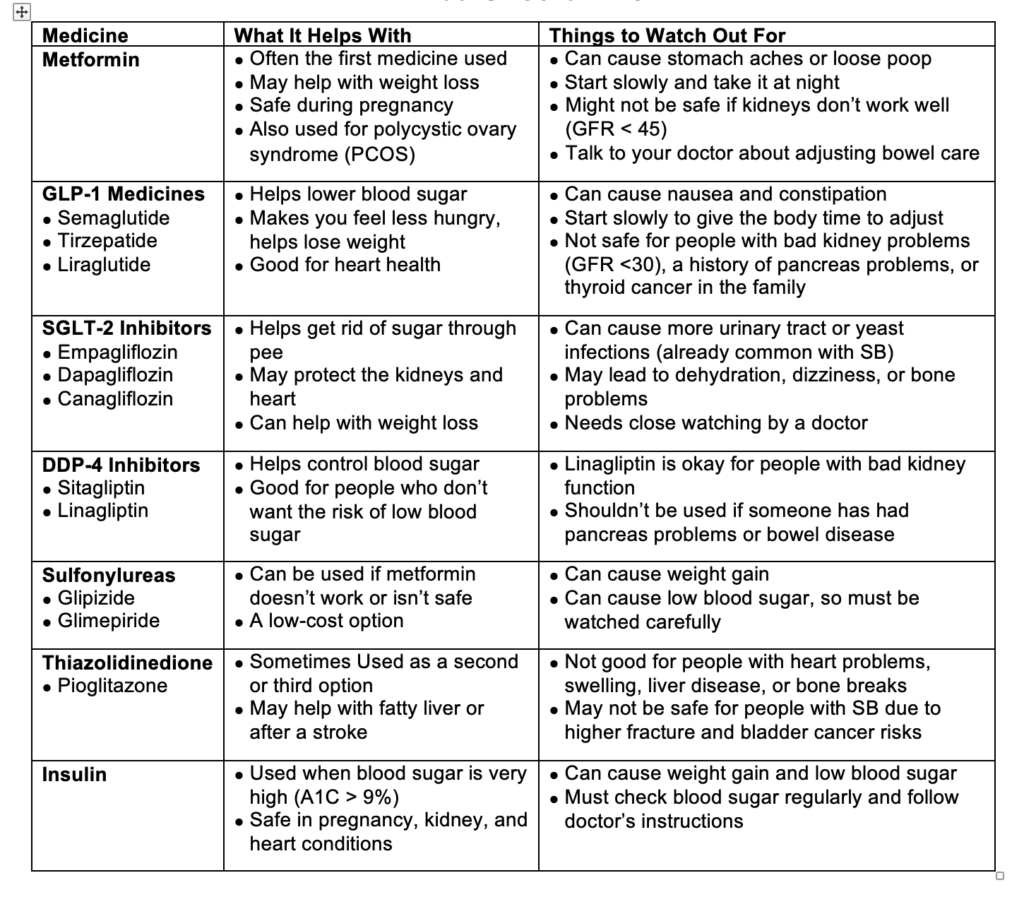
Originally created by Gordon Worley, MD.
Reviewed and updated by Ellen Fremion, MD, 2024
This information does not constitute medical advice for any individual. As specific cases may vary from the general information presented here, SBA advises readers to consult a qualified medical or other professional on an individual basis.